Luminara Serif Font for Handmade Labels & Elegant Printables
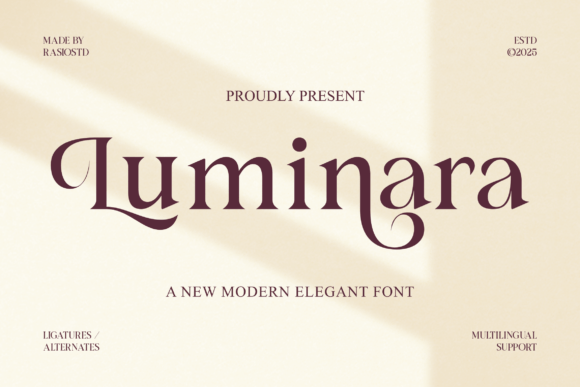
As someone who designs printable wall art, hand-poured candle labels, wedding welcome signs, and digital planner kits—every font choice is a quiet business decision. Luminara isn’t just another serif font. It’s the kind of typeface that makes customers pause mid-scroll, tilt their head, and think, *“This feels special.”* With its refined curves, high-contrast strokes, and subtle decorative details, Luminara carries quiet luxury—not loud extravagance. That balance is exactly why it works so well across physical and digital craft products.
Why Luminara Fits Real Craft Projects (Not Just Mockups)
Luminara shines where elegance meets legibility: on 1.5-inch boutique gift tags, 5x7 wedding invitation suites, vinyl-cut farmhouse signs, and even small-batch product packaging like soap boxes or tea tins. Its graceful serif structure and balanced proportions mean it holds up beautifully at both 10pt (for fine print on labels) and 120pt (for oversized wall art). Unlike some ornate serifs that blur when cut on a Cricut or Silhouette, Luminara’s clean terminals and open counters keep shapes crisp—even in bold weight—so your stickers stay sharp and your engraved wooden tags remain readable.
Where You’ll Use Luminara Most Often
- Candle & Apothecary Labels: Pair Luminara’s Regular weight with a soft sans serif for ingredient lists—its contrast adds sophistication without sacrificing clarity on matte kraft paper.
- Wedding Stationery: Use the Bold or Italic for “Mr. & Mrs.” on foil-stamped invites, then switch to Regular for RSVP cards. The high-contrast strokes catch light beautifully in print.
- Digital Printables: Planner covers, quote pages, and habit trackers gain instant warmth with Luminara headings—especially when layered over neutral watercolor backgrounds.
- SVG & Cut Files: The clean serifs and consistent stroke width translate reliably into vector paths. No jagged edges, no lost detail at small sizes.
- Seasonal Packaging: Think holiday mugs, Easter tags, or summer farmers’ market tote bags—Luminara adds timeless charm without looking dated or overly formal.
Readability Tips for Physical & Digital Crafters
For cutting machines: Stick to Regular or Bold weights at 14pt or larger when designing intricate sticker outlines. Avoid ultra-thin strokes below 10pt—they can vanish in vinyl weeding or inkjet printing. On printed cards, Luminara performs best as a display font—ideal for titles, names, and short phrases (under 8 words). It’s not meant for body text in multi-page booklets, but it’s perfect for front covers, section headers, and decorative banners in your Canva templates or Procreate layouts.
Smart Font Pairings for Your Shop Listings
Luminara thrives in contrast. Try these real-world combos:
- Luminara Bold + Montserrat Light: Clean, modern, and highly legible—ideal for product packaging mockups or Etsy banner graphics.
- Luminara Italic + a delicate script (like “Amelie” or “Lavanderia”): Adds movement and personality to greeting card suites or bridal shower invitations.
- Luminara Regular + Open Sans: A trusted pairing for printable planners—elegant headings meet highly scannable daily notes.
Each combination strengthens your brand identity without competing visually. And because Luminara is a modern serif font—not a historical revival—it pairs naturally with contemporary design assets, from minimalist SVG icons to textured digital brushes.
What’s Included & What to Check Before You Buy
Luminara typically includes Regular, Italic, Bold, and Bold Italic weights—enough flexibility for most craft applications. Look for OpenType features like standard ligatures (to smooth common letter pairs like “fi” or “fl”) and stylistic alternates (subtle variations for “a”, “g”, or “y”) that add nuance to your designs. If you sell internationally or create bilingual printables, verify multilingual support—many modern serif fonts cover Latin Extended-A, so accents in French, Spanish, or German render cleanly. File formats matter too: TTF and OTF are essential for desktop apps; WOFF/WOFF2 help if you ever build web-based design tools later.
A Note on Commercial Licensing (Yes, This Matters)
If you’re selling physical products—like laser-cut wooden signs, printed greeting cards, or embroidered tote bags—you need a commercial license. The same goes for digital downloads: SVG files, Canva templates, editable PDFs, and Procreate brush sets all require permission to embed or redistribute Luminara. Most reputable font vendors offer clear commercial licenses that cover unlimited sales, client work, and resale of end products (not the font file itself). Always read the EULA before adding Luminara to your shop’s design toolkit—especially if you plan to use it in logos or permanent branding elements.
Final Thought: It’s Not Just Typography—It’s Tone
Your font choice whispers before your customer reads a word. Luminara says “thoughtful,” “crafted,” and “trusted”—without shouting. It elevates a $4 sticker into something worth saving. It turns a simple printable quote into a keepsake. And for makers juggling production speed and aesthetic integrity, it delivers both: reliable performance in design software, and emotional resonance on the shelf or screen. Whether you’re updating your Etsy banner, drafting a new label layout, or sketching a wedding suite concept, Luminara is one of those rare serif fonts that feels like a collaborator—not just a tool.